






Contact us about

Coaching 

Psychotherapy

Courses

Bookings 

-----------------------

Liara Covert, Ph.D

Insight of the Moment

"Where to from here is shapes by your vision and will." -Liara Covert


Facebook

Instagram

Linked In

Books

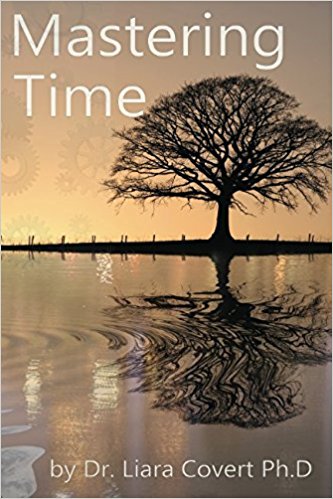
*Mastering Time

Amazon Australia(Kindle)


365 Paths to Love

Contact us (paperback) 

Be Your Dream

Amazon Australia


Transform Your Life

Amazon Australia

Daily inspirational quotes about life from the book Transform your life - 730 Inspirations


Cosmic Synchronicity

Amazon Australia

This book helps your recognise challenges and overcome fear

Self-Disclosure

Amazon Australia


145 inspirational quotes to motivate your to be honset with yourself and solve your problems.


This area does not yet contain any content.
Login
Contact us to request or participate in blog interviews
Monday
Feb162009

15 steps to nurture psychic insight

Why does psychic insight often mystify people? The dictionary offers varied meanings for “psychic.” Some people believe it pertains to things non-physical and non-scientific. Further, some people believe it relates to mystical aspects of the human soul or mind not readily proven or left unexplained.

Other people believe it describes individuals who are sensitive to forces, energy and forms that appear supernatural or inconceivable. Still other people prefer to avoid labels and detach from any view that requires external validity. Whatever your perspective, consider 15 steps to nurture psychic insight;

1) Attune to energy. Take steps to discern energy in diverse forms within and around you. They comprise you, affect your perception, scope of senses, faculties, health and well-being.

2) Raise self-awareness. As you begin to awaken to your thoughts and feelings, you can employ different techniques to gain insight into their underlying (and unconscious) causes.

3) Notice what is unnatural. Decisions you repeat reinforce conditioned responses to stimuli. You adopt practices based on vibrations expected from your senses or, based on what you are told, until you come to define what is natural to you.

4) Rediscover traits of "natural". Human beings are taught to forget what is. They are urged not to express how they feel when they feel it, to believe and consume man-made things and ideas. Life is a process of recovering inner-knowing on the natural, spontaneous, uncultivated, formless, and presence.

5) Recognize the influence of ego. Most of what you think and feel is displaced. The ego cannot relate to or begin to understand the present. Ego urges you to resist, devalue and avoid anything that would refer to the here and now.

6) Move beyond time. Wherever you perceive, you draw from conditions to rationalize a certain reality. Learning how you obscure things is a step toward dissolving what is not happening now. To detect when your mind wanders in time is how you realize ego distracts you from truth. Take time out of the equation and you remove ego influence.

7) Prepare to dissolve mindsets. A shifting of core consciousness must occur for you to consistently and genuinely change focus. This involves progressive stages of feeling, exploring and dissolving emotions using guided methods of mental discipline. To step beyond the"I" and "me" in thoughts and actions means you begin to transcend it.

8) Awaken deliberate intention. When you are busy getting somewhere, you are not present, do not notice inner patterns or deal with them. To awaken soul is to uncover something beneath your ingrained attitudes worthy of new attention.

9) Purge self-indulgence. Human beings are motivated by what they imagine will bring them pleasure. To humour your whims and satisfy your cravings is to self-indulge in ways that do not always serve you.

10) De-condition the mind. You exert yourself as part of a goal-setting process hoping to achieve certain personal outcomes. It is necessary to de-condition the mind to purify and restore your former, high estate of awareness.You may encounter resistence but this is but a trapping of the mind.

11) Accept events that unfold. As you consciously choose to align with energy as you sense it, you begin to embrace the concept of inner non-resistance. Choosing to accept getting what you want and not getting what you want, is like opening a door into unseen worlds. Beware though: indifference and reactivity are judgments. Acceptance is something else.

12) Choose to be in the now. At a given moment, when reasons for your action relate to a sense of presence, then you do not act based on ego. Moving beyond conditioned reasons for identity brings you to new levels of awareness and opens your senses to ingest energy outside human perception.

13) Move beyond fear. You no longer have reason to judge and consciously grasp what is. This is a mental place where you begin to view life with varying levels of insight. Words do not always adequately translate experiences.  You learn to recognize and dissolve walls to deeper, psychic awareness.

14) Nurture a gentle heart. Intuitively understanding the hearts of others means you arrive at a point where you sense everything is either from the view of perceiver, he who is perceiving, or the thing perceived; or, consciousness, force, or matter. Then, you evolve to sense all views simultaneously.

15) Align with pure love. To consciously move beyond conditioned mental images brings you to align with energy without conscious reference. You do not compare, juxtapose or analyze. Higher awareness allows you to experience an energy state or field without self-absorption. To access high energy vibrations between the spiritual self and fragmented selves, rediscover the practice of love.  Go beyond limitation.

Sunday
Feb152009

Elizabeth Gilbert & 3 points about genius

Elizabeth Gilbert wrote, Eat Pray Love, about a year she spent travelling the world after a difficult divorce. She has written other books, but this one is particuarly engaging for its humor, trans-cultural flavor, and spiritual healing journey.

Regardless of gender or life condition, something about her journey resonates with every reader. It may be something you experienced in common, lost, abandoned or left behind during a stage of your life. It may be a reaction, a passing fancy or, a dream to venture where you had feared to tread. It all brings you back to your core self. Consider three points about genius;

1) Genius is not rare. Most people speak of genius as a prodigy, in terms of things they are not. They use it as a tool for alienation rather than the ket to reconnect to the deepest spirit. Recognizing your own genius is a normal state of mind blocked by a fundamental defect: lack of insight into yourself.

2) Genius is a second insight. The prospect of radical transformation from the inside brings thoughts of revelation, salvation, escape from suffering, solace, peace. To rediscover this is part of a process of liberation from what you thought you knew where you were. You turn to face your demons.

3) Genius is awareness. To discern dysfunction and reactions within is part of a core healing process. New levels of awareness bring new levels of consciousness and grasp of things as they truly are. Some people trigger revelations during long and perilous geographical journeys. Other people realize how they live, how they manifest or perpetuate certain conditions and mindsets, without ever moving. No matter where you think you go, your mind creates illusion. Becoming aware how it functions brings you degrees of sanity.

Saturday
Feb142009

7 Tips for coping & disallowing

Emotions can stun and paralyze you yet, they also energize and renew you. People are often unaware of the choices they have. You can learn how not to keep situations alive in your mind.

At this moment, you can choose to move beyond thoughts and feelings.  They do not have to shape your identity.  People shoulder unnecessary emotional bagage. This is not who you are. You are still in the process of figuring out the truth.

Every person goes through stages of limiting himself by using negativity, complaints, grievances, guilt, anger or regret. When part of you clings to emotions, they seem to be who you are. Consider 7 tips for coping with what does not serve you;

1) Raise self-awarenss. Many approaches exist to open your senses and faculties.  The majority of people live in an imagined reality. When you act to discover yourself through things, this creates attachment and prevents you from being aware.  Determine where it would help you to shift focus.

2) Believe change is possible. Nothing you have done in your perceived past can prevent you from being present now. Presence is that state of mind which enables you to step beyond ego, inadequacy, fear or, what holds you back from feeling less than you are. Youmove beyond disbelief to faith.

3) Guide yourself with love. Whenever some situation is not explored, understood, accepted and the energy dissolved, the resulting energy forms a chain. This false sense of who you aregrows into whatyou believe is your life. To choose to love yourself empowers you to work through anything.

4) Take back your inner power. A common reaction is to share your story and portray a victim who has given away power or, certain levels ofresponsibility. You may have felt wronged, compelled to defend a position.Many people engage in imaginary or mentaldialogue, accusing or directing energy away from yourself. This is an emotionally-draining exercise.

5) Discern energy differently. Each thought and feeling isa packet of energy you are creating and discharging. This process has causes and every cause has its effects.As you become more aware of those things you consciously identify with, you get closer to grasping how the ego and mind operate.

6) Realize who you are does not diminish. People are conditioned to quantify and measure to determine a sense of value and self-worth.  They visualize needs and forget they do not become less human, less desirable, or in any way dminished by not satisfying perceived needs.  Everyone is in an ongoing process of learning to let go of people, objects, relationships and anything they come to value. Each is a test. 

7) Rediscover the joy of being.  Theory differs from practice and thoughts differ from experience. The ego only knows thought because this is what it is.  Whatever your mind attaches to becomes important, becomes a substitute for what you do not permit yourself to feel. As you begin to recognize you are never attached to anything except for in your mind, you rediscover the joy of being. You forget reasons for bad energy. You move beyond ego to explore consciousness.

Saturday
Feb142009

Patanjali & 5 steps to master your thoughts

Patanjali offers 196 yoga sutras to increase your clarity and deepen you practice. Thought patterns are gradually mastered through learning non-attachment. Consider these five steps to begin to master your thoughts;

1) Notice whether your thoughts are colored with aversion or attraction. Do not judge. Learn to be an astute observer.

2) Nurture the lifestyle, actions, speech, and thoughts, and spiritual practices that lead in the positive direction. (rather than going in the opposite direction, away from the positive, and towards the negative).

3) Let go of the mental coloring of your thoughts that lead away from the spiritual (rather than going in the opposite direction, giving in to the attachments and aversions).

4) Raise conscious awareness to become more discerning of how you think and feel and the implications.

5) Practice consistency.  Learn to choose the wiser courses of action with deliberate intention.

Friday
Feb132009

5 Tips to develop aikido-monk awareness  

Martial artists develop insight into energy, mental and physical strength. They learn the mind and body are inseparable. They see thought and emotion interact together with consequences.  The mind attunes to energy consciousness and sensitivities.

Aikido blends martial arts, philosophy and spiritual beliefs. Practitioners train to re-direct aggressiveness and negativity with precise techniques and loving kindness. Progress arises from using energy fields and learning when not to exert oneself. To harness the flow of energy means one can move out of the way or respond accordingly to heavy energy fields.

Now, monks are spiritual masters of self-restraint. They do not permit egoism, attachment or vanity to control their decisions. They sense the flow of core energy and keep the peace. Monks subdue intense passions and are aware of the right thing to do. They set a standard for wisdom and self-control.

Aikido-monks attain a level of spiritual refinement that combines key traits of both monks and aikido. This hybrid perspective sheds light on inner power and reconciliation. Consider five tips to develop aikido-monk awareness;

1) Set your mind on your vision. Those who seek self-mastery do not find it. Those who master themselves grasp every being has degrees of awareness, but does not always grasp inner power or the paths and guidance to develop it.

2) Step back and observe. The simple step of choosing to become more aware helps you tap into inner knowing. You begin to identify and explore your conditioned responses.

3) Re-pattern instinctive responses to fear. Fear and insecurity are core beliefs that reinforce selfishness. Where these traits are not recognized and addressed, peace and compassion are less likely to become responses to conflict.

4) Synchronize thought, emotion and movement.  Gaining insight into emotions enables you to foresee what is coming or erupting and curtail it. Restraint in the senses can translate into restraint in conduct. That which cannot always be said or expressed in words can still be done. Be consistent.

5) Discipline the spirit. The path to personal harmony invites you to discipline your spirit and to explore power found in action and inaction.  Take steps to reconnect with chi energy and strengthen links between mind, body and spirit. Learn how the storage and sudden discharge of energy is possible without the use of muscular force. Learning is perpetual your way.